Sleep is an essential restorative process. While asleep, your body is working to repair and reset, doing things like balancing hormones, consolidating memory, regulating inflammation, repairing cellular damage and more. If you’re not getting restorative sleep, your health and wellness are going to be impacted. Lots of things affect how well you’re sleeping, but your pillow plays a bigger role than most people realise. A supportive pillow keeps your spine aligned and improves your sleep quality.
What Happens to Your Spine When Pillow Support Is Off
Sleep posture matters more than you might think. The cervical spine (the neck area) has a natural curve. And maintaining that curve while horizontal is essential for healthy sleep. A pillow that is even slightly off in either direction places your neck in a compromised position for the entire duration of your sleep. Night after night, problems can accumulate. Over months or years, pain can become consistent and cause ongoing issues.
Negative impacts include:
- Circulation through the neck and shoulders gets restricted, impeding overnight muscle recovery and reducing the nutrient exchange that spinal discs rely on to stay hydrated and healthy.
- Poor pillow support places sustained load on the intervertebral discs in the neck, which are not designed to hold pressure in a compromised position for hours at a time.
- The neck joints can be compressed or under tension, depending on the position, contributing to stiffness, reduced range of motion, and localised joint irritation over time
- Nerves exiting the cervical spine can become irritated, causing pain, tingling, or numbness in the shoulders, arms, or hands.
- Cervicogenic headaches can occur. This is where overloaded muscles pull on the vertebrae and cause pain at the back of the head or neck that can move to the front. They’re often felt behind the eyes or across the forehead.
- Upper shoulder muscles compensate for poor neck positioning through the night, pulling on their spinal attachments and contributing to persistent muscle knots and tension through the upper back and neck.
- The thoracic spine (mid-back) adapts to sustained cervical (neck) misalignment, which contributes to upper back stiffness over time.
- Wry neck is a recognised outcome of poor sleep posture, where rotating the head in one or both directions produces sharp pain that can become a recurring pattern.
To pick the right pillow read our guide below!:

Which Type of Pillow Is Right For You?
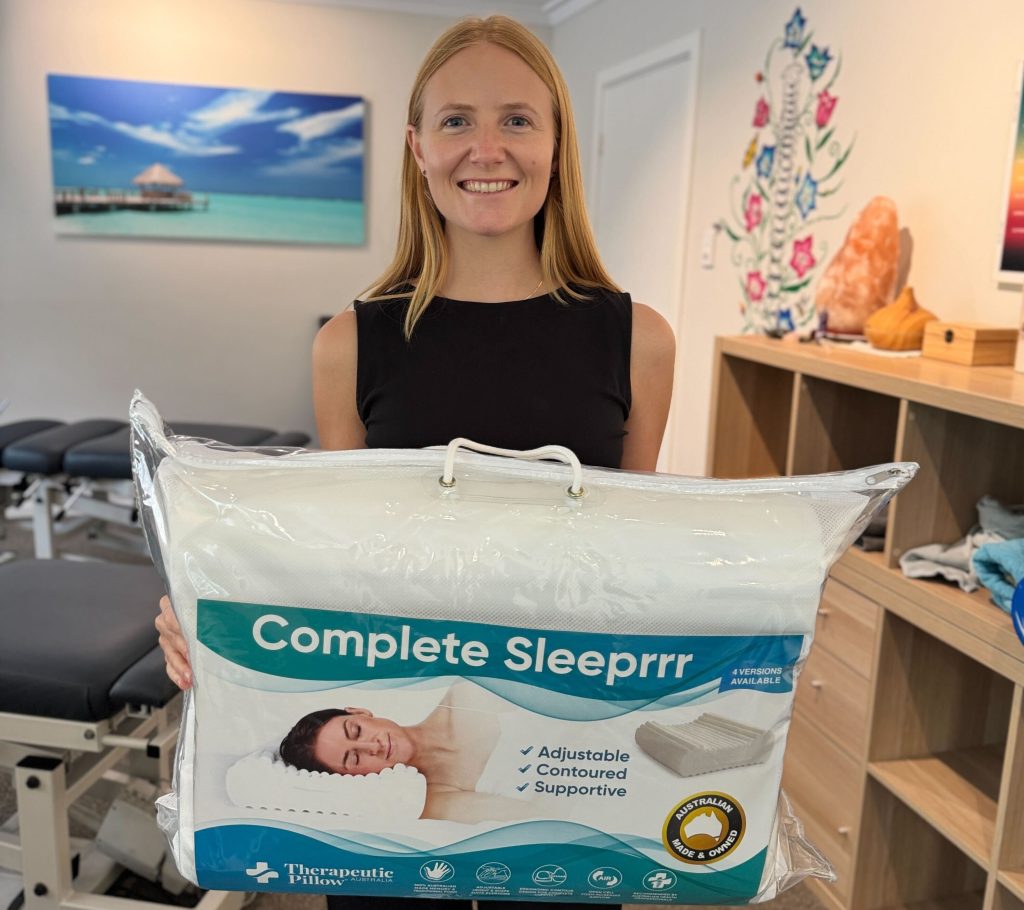
Complete Sleeprrr Experience the ultimate comfort with the Complete Sleeprrr Pillow – available in four different density options for personalised comfort. Fully adjustable and recommended by Australian healthcare professionals (including our own!), this pillow provides optimum neck and spine support for restful sleep. Designed with premium memory foam, it alleviates headaches, assists with neck pain, and promotes better posture. This fully adjustable therapeutic memory foam pillow is suitable for all body shapes and sizes. Benefits: Headaches and migraine reduction Improve neck and shoulder pain Assists with sleep
Other Negative Effects of Bad Sleep Posture
Bad sleep posture means poor sleep quality. Sustained discomfort through the night pulls you out of deep and REM sleep, often without fully waking you. Less time in those stages can cause a range of issues:
-
Disrupted nervous system recovery:
Deep sleep is when the nervous system does most of its repair and reset work. Fragmented sleep interferes with that process, regardless of how many hours you are in bed.
-
Hormonal disruption:
Sleep quality directly affects cortisol (stress hormone), melatonin, and growth hormone regulation. Poor sleep contributes to hormonal imbalance over time, which has effects on energy, mood, metabolism, and immune function
-
Cognitive performance:
Reduced REM sleep impairs memory consolidation, reaction time, and decision-making. These effects compound across consecutive nights of poor sleep
Bad sleep posture can also cause physical issues like:
-
Jaw and facial tension:
Poor head and neck positioning during sleep can increase clenching and grinding, and contribute to jaw pain, tooth wear, and face tension on waking
-
Respiratory:
Airway position is sensitive to how the head and neck are supported. A pillow that places the head at the wrong angle can narrow the airway, worsening snoring and making existing sleep apnoea symptoms harder to manage
-
Skin and lymphatic:
Sleeping in a position that restricts circulation can affect lymphatic drainage through the face and neck, contributing to puffiness and slower skin recovery overnight
-
Eye strain and headaches:
Pressure through the neck and base of the skull from poor pillow support can contribute to tension headaches that are present on waking and persist into the morning
Is It Time to Replace Your Pillow?
The body does most of its repair work at night. Deep sleep and REM sleep are when nervous system recovery happens, when tissues rebuild, when the inflammatory response gets regulated and much more. A pillow that’s unsupportive or places you in a poor position can disrupt your sleep, so even a good eight hours can still leave you flat. Sleep posture is massively important for getting a good night’s rest.
If you are getting any of the pains or problems we’ve mentioned, start by looking at your pillow. Ideally, they should be replaced every one to two years as the materials compress over time and can stop holding your position through the night, regardless of how it feels when you pick it up.
Persistent symptoms are worth assessing, and our chiropractors can help work out what is driving them and where to go from there. Contact us or book an appointment today so you can get a pillow that works for you and the best sleep possible.