
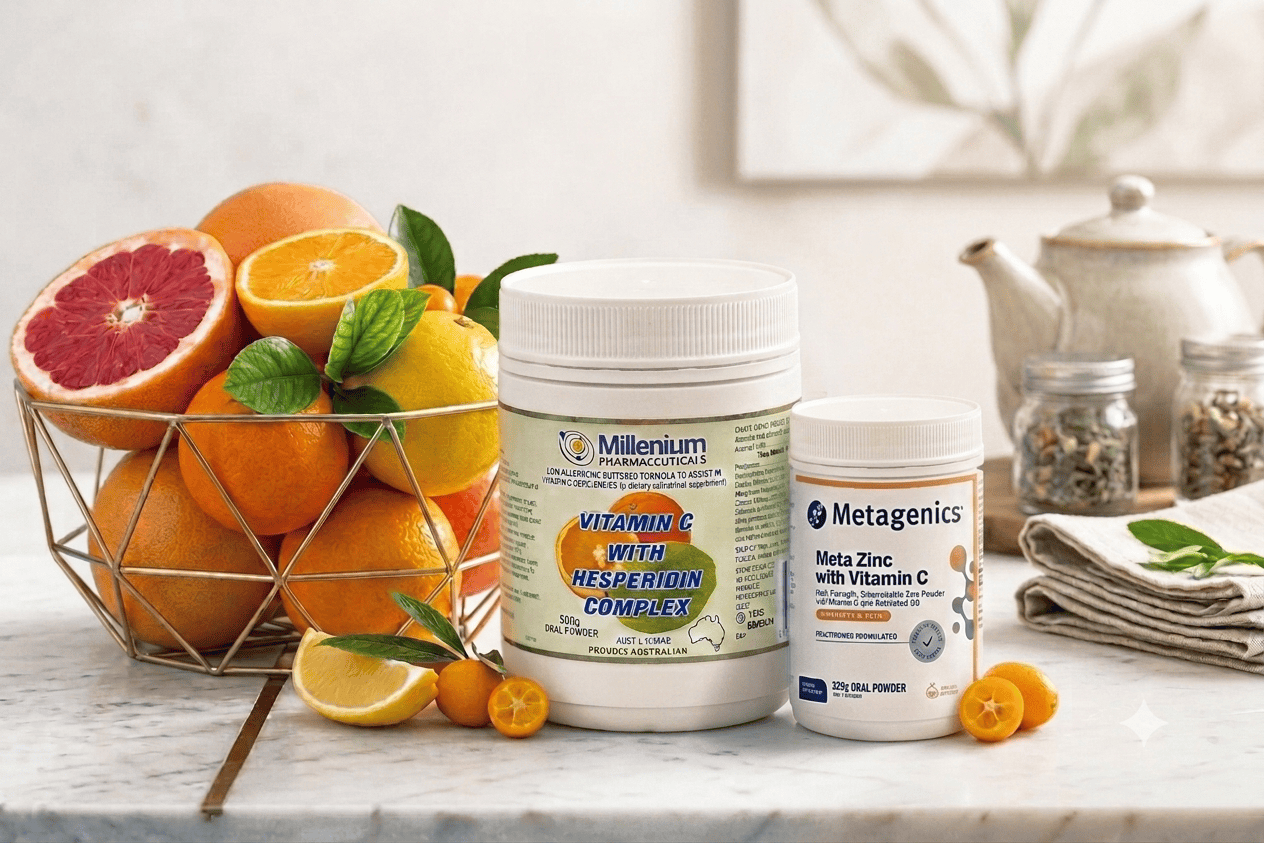
Pictured: Fruits Rich in Vitamin C Alongside Supplement Options Available at our Centre.
Vitamin C is such an important nutrient for our health and wellness. It’s a natural antioxidant that many systems in the body rely on every day.
Vitamin C supports healthy skin and collagen production, which also supports wound healing and tissue repair. It improves the absorption of essential minerals and is particularly effective in boosting the body’s ability to take in iron. It also promotes white blood cell function and strengthens the body’s immune system.
Your body does not make vitamin C on its own, and because Vitamin C is soluble in water, it’s not possible for the body to store it for future use. This means it’s essential to have a regular supply from food or supplements.
You might think you’re getting enough, but a lot of people aren’t. In this article, we’ll discuss all the signs and symptoms that arise from low vitamin C or deficiency
If you are interested in a detailed overview of the role of Vitamin C, read our blog:
The Power of Vitamin C: Functions, Deficiency, and Food Sources
Lifestyle Factors That Influence Vitamin C Levels
There are a range of factors that influence the amount of Vitamin C the body needs and the effectiveness of its absorption.
These include:
- Smoking and the inhalation of second-hand smoke
- Infection or illness
- A recent surgery
- Wounds in the process of healing
- High levels of stress
- The consumption of alcohol on a regular basis
- A diet that is lacking in variety or high in processed foods
- Digestive conditions that interfere with the absorption of nutrients
- High intensity exercise or physical training
- Certain medications
During times of physical or emotional stress, the demand for Vitamin C in the body is typically much higher. This is when it is critical you focus on maintaining a high vitamin C intake.
Deficiency Symptoms to Watch Out For
A deficiency in Vitamin C develops slowly. The signs can be small and easy to ignore.
Frequent Colds & Infections
In the immune system, Vitamin C helps to produce and activate white blood cells. If you are a person who catches every cold or flu and is slow to recover, low vitamin C could be the culprit.
Slow Healing
Collagen requires vitamin C to be made in the body. It’s responsible for tissue repair, so when levels are low, healing slows down, bruises persist, and skin seems more fragile.
Fatigue & Low Energy
Vitamin C plays an integral role in energy metabolism. So, an intake that is insufficient can cause tiredness and depleted energy levels.
Bleeding Gums
Connective tissues in the mouth depend on collagen for their integrity. Low vitamin C means low collagen. This can cause gums that are prone to bleeding during brushing or flossing.
Dry, Dull Skin
Low collagen levels cause skin to be dry, rough or lack elasticity. This also accelerates the visible signs of skin ageing and reduces the skin’s ability to recover from UV exposure and environmental stress.
Discomfort in the Joints, Muscles & Spine
To support tendons, ligaments, cartilage and spinal discs, collagen is a necessary protein. When the intake of Vitamin C is not sufficient, and collagen production is reduced, muscles and joints can be more sore and less resilient.
Brain Fog & Poor Concentration
In the brain and nervous system, Vitamin C is present in high concentrations. If levels are low, it’s common to experience difficulty with focus and mental clarity.
Increasing Your Vitamin C Intake
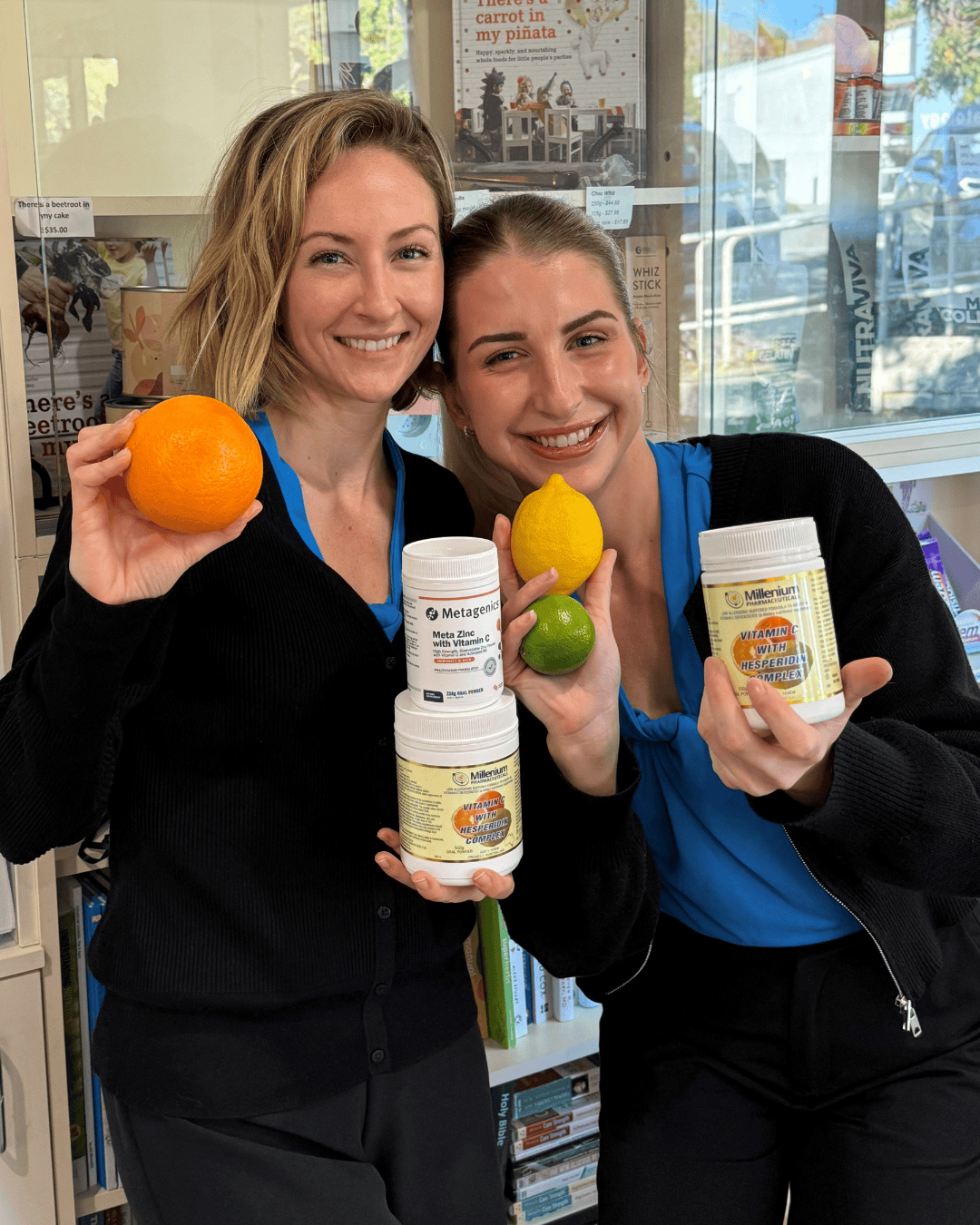
Whole Foods
Whole foods are a great option because you’ll also get fibre, antioxidants and other nutrients.
Foods rich in vitamin C also contain bioflavonoids that improve its bioavailability. This means that absorption tends to be better with whole foods due to the synergistic nature of the many other nutrients working together.
Aim for fresh fruit and vegetables and a plate that contains lots of different, bright colours. Find information on which fruits and vegetables to choose here: Vitamin C Food Sources
Supplements
Supplements are a convenient option, especially when intake needs increase.
Tablets and capsules are simple to use and are suitable for daily use, with chewable forms available. Powders are also an option and allow you to mix them into water for a flexible dose.
Certain supplements mix Vitamin C with other substances that help the body protect itself or manage oxidation.
For individuals who experience digestive discomfort, buffered Vitamin C products are great options because they cause fewer reactions in the stomach.
Avoid the Negative Symptoms
Don’t put up with persistent fatigue, slow healing, bleeding gums, frequent colds, joint or muscle pain, brain fog, and dull skin.
If you’re dealing with these symptoms, your vitamin C intake is a great place to start looking, and increasing your intake is a simple way to improve your health and wellness.
If you’re feeling some of these symptoms, ask one of our practitioners about vitamin C next time you visit the clinic, as not all Vitamin C supplements have the same quality and absorption.

